

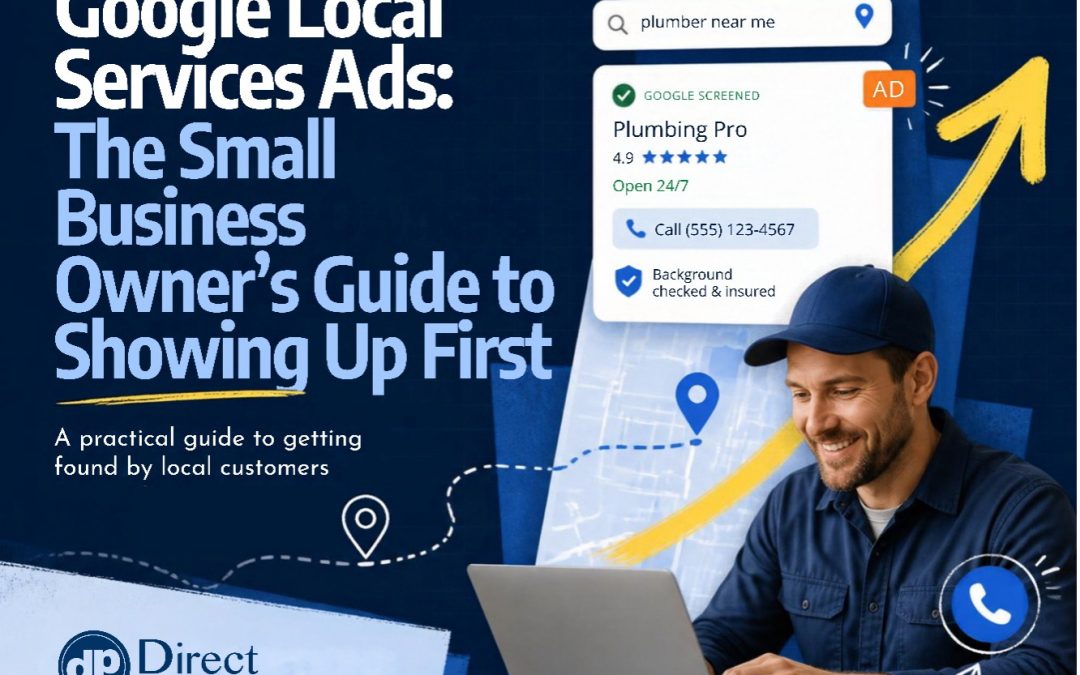
Google Local Services Ads: The Small Business Owner’s Guide to Showing Up First
If you’ve ever searched “plumber near me” or “HVAC repair” on your phone, you’ve probably scrolled right past the regular search ads without even realizing it, because your eye went straight to the businesses at the very top: the ones with photos, star ratings, and a green checkmark. That top slot is exactly what Google Local Services Ads are built for, and it’s one of the most cost-effective ways for small businesses to get in front of customers who are ready to hire right now.
At Direct Placement, local visibility is what we do, and Google Local Service Ads are one of the fastest-moving pieces of that puzzle. Here’s everything you need to know, from what an LSA actually is to the platform change rolling out this year.
What Are Google Local Services Ads?
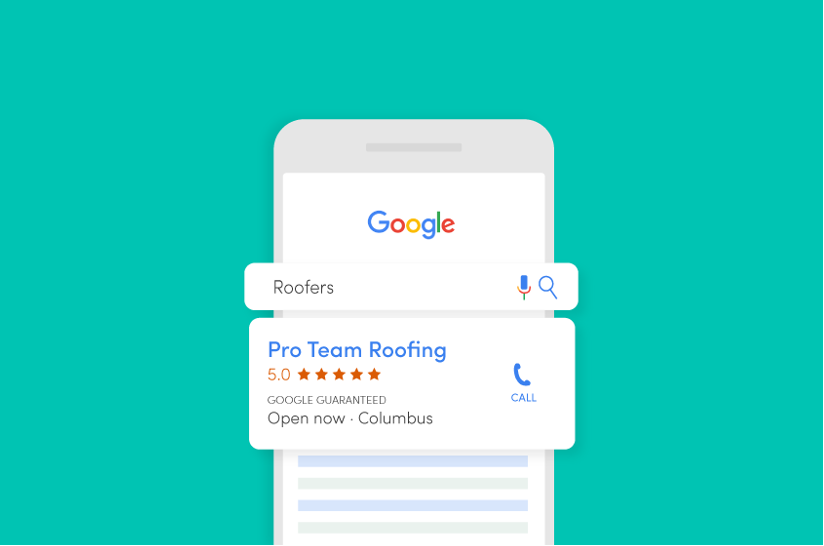
Google Local Service Ads (also called local services ads, Google LSA, or simply google local ads) are a lead-generation ad format built specifically for local service businesses: plumbers, electricians, HVAC techs, locksmiths, roofers, house cleaners, lawyers, and financial planners, among others. When someone searches for a service plus a location (“electrician Portland,” “family lawyer near me”), Google can display these ads in a dedicated block above the regular paid ads and even above the map pack.
What makes LSAs different from a standard Google Ads campaign is the pricing model. You’re not paying per click; you’re paying per lead. That means a customer has to actually call you, message you, or book an appointment through the ad before you’re charged anything. No more paying for curious clicks that go nowhere.
It’s also worth noting that LSAs are “keywordless.” You don’t bid on specific search terms. Instead, you select the job types and services you offer, and Google’s system matches your ad to relevant searches automatically. That’s a big shift for business owners used to traditional PPC, and it’s one of the reasons working with a team that manages this daily tends to pay off.
Google Guaranteed: The Trust Badge That Builds Clicks
You’ve probably noticed the green shield icon with a checkmark next to some LSA listings. That’s the Google Guaranteed badge, and it’s a big deal. For home service categories like plumbing, HVAC, and electrical work, businesses have to pass a background check, verify their business license, and confirm proof of insurance before Google will award it. Professional service categories (law, real estate, financial planning) go through a similar process for a related badge called Google Screened.
The badge isn’t just decorative. It signals to a potential customer that Google has actually vetted you, and if that customer books a job through your LSA and isn’t satisfied, Google may reimburse them up to a lifetime limit (currently $2,000 in the U.S.). That guarantee is a powerful trust signal in a world where people are wary of hiring a stranger off the internet. For a small business trying to compete with bigger, more established competitors, it can be a genuine leveler. Earning the badge often matters more to conversion than having the biggest ad budget.
Lead Management: Where Most Businesses Leave Money on the Table
Here’s something a lot of business owners don’t realize until it’s costing them: not every lead you’re charged for is actually a valid one. If someone calls asking about a service you don’t offer, or a call is a robocall, a wrong number, or lasts only a few seconds, that lead is disputable. If you catch it, Google will credit you back.
The problem is that disputing leads takes discipline. It means logging into the dashboard regularly, listening to call recordings, and flagging anything that doesn’t meet the criteria for a valid lead. Businesses that stay on top of this consistently often recover a meaningful chunk of their spend. Every dollar clawed back from an invalid lead is a dollar that goes toward a real customer instead.
The other half of lead management is response time. Google actively tracks how quickly you answer or respond to leads, and slow response times don’t just cost you the job, they hurt your ranking on future searches too. Enabling message and booking options (not just phone calls) gives customers more ways to reach you outside business hours, which matter more than most owners expect, especially on nights and weekends when people are researching but not ready to make a call.
Budget Tips: Setting a Weekly Budget That Actually Works
LSAs currently run on a weekly budget, and getting this number right matters more than people think. Set it too low, and Google will simply throttle your visibility once the budget’s exhausted, which can mean you’re invisible for the back half of the week, right when someone in your service area is searching. A simple way to think about it: multiply the lead volume you want in a week by what you’re willing to pay per lead, then build in some headroom (research suggests 20–30%) for natural swings in demand. If you’re just getting started, most guidance, including Google’s own, favors letting the system optimize automatically for a couple of weeks before switching to more manual, per-lead bid control. That early data is what lets the algorithm start finding you cost-efficient leads instead of guessing.
Big Change Ahead: LSAs Are Moving Into Google Ads
Here’s something every current or future LSA advertiser should know: Google is retiring the standalone Local Services Ads dashboard and folding LSA campaigns into Google Ads, under a new “Performance Max with pay-per-lead goals” campaign type.
The good news first: a lot of what makes LSAs work isn’t going anywhere.
- You still only pay for valid leads, not clicks.
- Ads still appear exclusively on Google Search and Google Maps, in the same position as before.
- Targeting stays keywordless, based on your service categories and areas.
- Verified status and the Google Guaranteed/Screened badge carry over automatically. No re-verification needed.
But several operational details are changing, and they’re worth planning for:
- Weekly budgets become daily budgets. Google will automatically divide your historical weekly budget by 7 to set a new daily average. Your monthly cap stays mathematically equivalent, but the way you’ll want to monitor and adjust it day-to-day is different.
- Manual bidding is going away. If you’ve been setting a manual max cost-per-lead, that option is being deprecated in favor of Google Ads’ standard bidding models.
- Vertical-level Target CPA is being consolidated. Businesses that set different cost targets for different job types (say, a different target for HVAC repair versus HVAC installation) will need a workaround, typically separate campaigns per vertical, since Google Ads won’t support that level of granularity in one campaign.
- Performance history won’t transfer. Historical reports from the old LSA dashboard don’t migrate over automatically, so anything you want to keep needs to be downloaded or screenshotted before your migration date.
- BBB callouts are being retired, replaced by a broader set of structured callouts (business hours, specialties, payment methods, and so on) that businesses will need to set up manually.
The rollout is phased. Select U.S. home and storefront categories (plumbing, HVAC, electrical, appliance repair, house cleaning, lawn care, roofing, pest control, and moving) began migrating in August 2026, with broader categories and service-area businesses following in late 2026, and international accounts in 2027. Business owners get email alerts 14 days and 7 days before their migration date, and the transition itself is largely automated. But “automated” doesn’t mean “set it and forget it.”
This is exactly where we come in. Platform transitions like this are where a lot of small businesses quietly lose ground, not because the new system is bad, but because nobody’s watching the account closely enough to catch a budget miscalculation, a paused campaign during a verification review, or a bidding strategy that no longer makes sense once manual controls disappear. Our team is tracking this migration for every client running google local services, backing up historical performance data before it disappears, restructuring campaigns where vertical-level bidding needs to be split out, and making sure nothing about your ranking or lead flow gets disrupted mid-transition.
Ranking Factors: What Actually Moves You to the Top
Regardless of which dashboard it lives in, the ranking model behind LSAs weighs several factors together:
- Proximity: how close your business is to the person searching
- Reviews: both the quantity and how recent they are, pulled straight from your Google Business Profile
- Responsiveness: how quickly and consistently you answer calls and messages
- Business hours and job types enabled: if a service isn’t turned on, you’re invisible for that search regardless of everything else
- Budget and bid: still a factor, but not the only one
The review piece deserves special attention. Businesses that let their reviews go stale, even for a few weeks, can see a real drop in visibility, while businesses with a steady flow of fresh reviews tend to stay consistently near the top. That’s one more reason local online advertising for small businesses works best as an ongoing strategy rather than a “set it and forget it” campaign. The businesses that treat their Google Business Profile and LSA account as living, maintained assets are the ones that keep winning the top spot.

Why This Matters for Small Businesses
The businesses that benefit most from google local services advertising are the ones who can’t outspend national competitors on traditional ads but can out-hustle them on responsiveness, reviews, and local trust. That’s most small businesses. LSAs level a playing field that used to favor whoever had the biggest ad budget, and instead reward the businesses that show up, answer the phone, and take care of their customers.
That said, managing daily and weekly budgets, disputing invalid leads, keeping job types current, protecting your ranking, and now navigating a full platform migration is a genuine job. It’s exactly the kind of ongoing, hands-on management that makes the difference between an LSA account that quietly drains budget and one that consistently books real jobs, through this transition and beyond.
If you’re ready to see what a properly managed google guaranteed ads campaign could do for your business, our Google Local Service Ads page walks through how we set up, verify, and manage LSA accounts for small businesses, or you can reach out to our team directly to talk through what your local market looks like, migration included.