
ChatGPT Ads Update: What Target CPA and Target CPC Mean for Your Campaigns
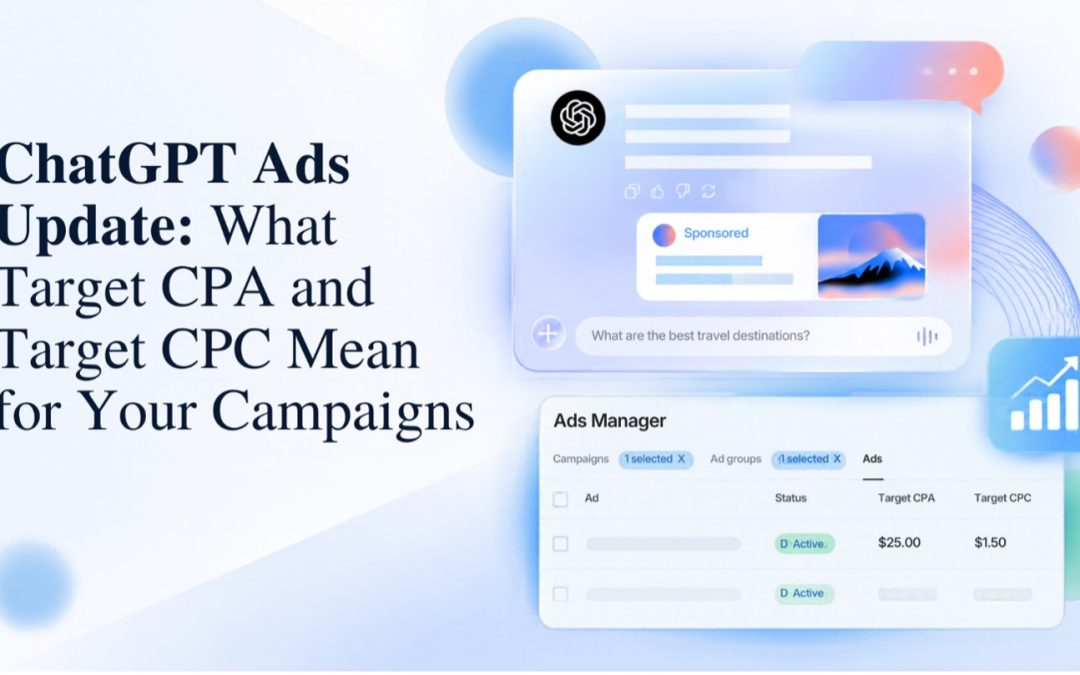
If you’ve been keeping an eye on advertising inside ChatGPT, there’s a notable change to know about. OpenAI is making ChatGPT Ads “intelligent by default,” which means the platform will take on more of the day-to-day bid management. You tell it what results you want and what you’re willing to pay, and the system adjusts bids and delivery to work toward those goals.
If that sounds familiar, it should. It’s the same direction Google Ads has taken with Smart Bidding. Here’s what’s changing, the dates that matter, and how to get ready.
What’s Changing in ChatGPT Ads
Starting Monday, November 9, advertisers can choose a cost target in Ads Manager, either when creating a campaign or when updating an existing one. Two new bidding options are launching.
Target cost per action (Target CPA) is for conversion campaigns. You set the average amount you’d like to pay for a conversion, such as a purchase or a lead, and the system adjusts bids and delivery toward that number. For new conversion campaigns, Target CPA replaces Max Bid.
Target cost per click (Target CPC) is for click campaigns. The old Max CPC setting capped each individual bid. Target CPC works differently: the system can bid above or below your target in each auction, aiming to get as many clicks as possible from your budget while landing near your desired average cost per click. For new click campaigns, Target CPC replaces Max CPC.
OpenAI is also renaming its “maximize results” (autobid) approach to intelligent bidding. The idea is unchanged: the system keeps adjusting bids and delivery to get the most from your budget.

The Dates to Put on Your Calendar
- November 9, 2026: Target CPA and Target CPC become available in Ads Manager, and you can start moving campaigns over.
- Now through year-end: Existing campaigns keep running as Max Bid or Max CPC campaigns, though you can switch bidding strategies if you want to deliver toward a target.
- January 1, 2027: Max Bid and Max CPC retire. Target CPA replaces Max Bid on existing conversion campaigns, and Target CPC replaces Max CPC on existing click campaigns.
The takeaway is simple: you don’t have to change anything today, but you’ll want to be deliberate rather than letting the January switch make the decision for you.
How to Prepare Your Campaigns
OpenAI’s guidance comes down to three practical steps, and they’re worth treating as a checklist.
- Start your transition early. Review your active campaigns now and begin moving them to Target CPA or Target CPC. Switching on your own schedule lets you watch performance and adjust, instead of troubleshooting after a forced change.
- Check your conversion signals. For conversion campaigns, confirm that your Pixel or Conversions API is sending the event you selected to the data source linked to your campaign. Event Quality Score (EQS) warnings can point to signal-quality problems, so resolve any gaps before you rely on automated bidding. Automated systems are only as good as the data feeding them.
- Set realistic targets. Look at your recent actual cost per acquisition or cost per click and use those numbers to choose targets. This matters more than it might seem. OpenAI cautions that overly restrictive targets or weak conversion signals can limit ad delivery and leave budget unspent. A target that’s too ambitious doesn’t make you more efficient, it just means your ads don’t show.
What This Means for Small Businesses
For small businesses, automated bidding is a double-edged tool. It saves time and can respond to auction conditions faster than manual adjustments, but it works best when you give it clear goals, clean tracking, and enough room to learn.
If you’re considering ChatGPT Ads as part of your marketing mix, a few grounding points:
- Treat it as a test channel. It’s a newer advertising platform, so start with a defined budget, measure cleanly, and avoid assuming it will behave like Google Search.
- Know your numbers first. If you don’t know what a lead or a customer costs you today, a cost target is just a guess. Your existing campaign data is the best starting point.
- Keep your core channels strong. Search campaigns, local visibility, and a website that converts are still the foundation. New platforms work best when they add to a solid base, not replace it.
How Direct Placement Can Help
Managing bids, tracking, and targets across more than one ad platform is a lot to juggle. As a Google Partner, Direct Placement has years of experience building and optimizing Google Ads and PPC campaigns for small businesses, and the fundamentals carry over: clean conversion tracking, realistic cost targets, and steady measurement. Our team can review your current numbers, help you decide whether testing ChatGPT Ads makes sense next to your existing campaigns, and keep your tracking and bidding strategy on solid ground.
We also make sure the pieces around your ads are working. That includes Google Local Services Ads for pay-per-lead local visibility, SEO for long-term organic traffic, and website design that turns visitors into customers. Explore the full range on our services page.
Frequently Asked Questions
What is Target CPA in ChatGPT Ads?
Target CPA lets you set the average amount you want to pay per conversion, such as a lead or purchase. The system adjusts bids and delivery to work toward that target.
What is Target CPC in ChatGPT Ads?
Target CPC lets you set a desired average cost per click. Instead of capping each bid, the system can bid above or below your target in each auction while aiming for as many clicks as possible from your budget.
When do Max Bid and Max CPC go away?
Both retire on January 1, 2027. Existing campaigns will move to Target CPA or Target CPC.
Do I need to change my existing campaigns right now?
Not immediately. Existing campaigns continue to run, but OpenAI recommends starting the transition now so you have time to set realistic targets and fix any tracking issues.
What is Event Quality Score?
Event Quality Score (EQS) is a signal-quality indicator in Ads Manager. Its warnings can help you spot problems with the conversion data being sent to your campaign.
Why might my ads stop spending after I set a target?
Targets that are too restrictive, or conversion signals that are weak, can reduce delivery and leave budget unspent. Using your recent actual CPA or CPC to set the target helps avoid this.
Want a Second Set of Eyes on Your Campaigns?
Whether you’re running Google Ads today or want to know where your marketing dollars are going, we’re happy to take a look. Request a free business review and we’ll walk through your current campaigns, your cost per lead, and where the opportunities are.